Art has become one of the most versatile and commonly used words used to describe forms of aesthetic appeal. It’s associated with things that are aligned, unaligned, proportionate, skewed, beautiful, and even disturbing; all of these traits aside, art has one definitive aspect: effectiveness. The goal is to make an impression, describe something that cannot be communicated in any other way, make the audience feel something incredible, and discover something new. Some have argued that art is an accident ordained by the Gods using the hand of mortals, others toil feverishly to perfect every last inch of whatever piece they have created, leaving no room for debate or Godly help; either way the “effectiveness” is there, taking just as many forms as it always did, and grasping just as many minds. So there in lays the newest, ancient, issue argued by artists, theorists and philosophers alike: Has technology tainted or enlightened art as a whole? Since art is an ambiguous term, the issue will prove to be a long standing and well established debate between knowledgeable, credible individuals.
Photography is an interesting form of artistic expression because of its vast difference from what most would call “fine art.” Photography began in the 1820’s with the very first photograph being taken by Niépce, who joined forces with Louis Daguerre in developing the details of their project, entitled, the “Daguerreotype.”
Some people found the technology fascinating and as an opportunity to seize their chunk of a new innovation, since this new process of creating still life, long lasting images of things required no skill in drawing or painting. But, others with already existing artistic skills found the Daguerreotype threatening, and lacking of a true creative nature. Somehow, in between an exact portrait and an exact photograph, art found a home over, under and through both of these mediums. There is no debate today, for photography has established itself as a worthy form of artistic expression; effective no less than a painting or a sculpture.
Can Digital Photography be…Photography?
Most people became instantly enthralled with the idea of a Digital Camera because being able to see the picture before you take it is really “cool.” Let’s face it, humans are gluttons to the technology industry, biting off more than we can chew and chewing more than we can taste. But, photographers think of Digital Photography in a very different way. Just as portrait painters thought back in 1826: Will this new invention end my career as an artist?
Out of the Dark room and into the light?
The discussion is not whether or not Digital cameras should replace film; that is typically a matter of preference and purpose. Digital photography brings up issues that are far more enduring, issues that are not as simple to resolve. With Digital Photography, the concept of a true dark room is eliminated, and in its place: photo manipulation software. Whether you’re an amateur and you use the free photo suite program thrown in with your camera, or whether you’re a pro who use the latest most comprehensive techniques; there is no contest that the Digital tools allow more control over the final product.
This is considered a good thing, right? From an onlookers stand point, yes it is. But for an artist who specializes in the dark room and the techniques of film photography, these new innovations might prove to eliminate the essence of one’s specialization.
The art of photography relies heavily on the element of surprise, spontaneity, and sometimes even accident. Within a photo lies one single instance, possibly only existing for the one hundredth of a second that it took the camera to flash over the scene. Any experienced photographer will tell you that it is important to take as many pictures as possible to hopefully find that beautiful gem of a moment surrounded by other similar, but ordinary seconds of time. Digital technology now allows complete control over those sacred moments, and even opportunity to edit the photograph afterwards, possibly creating these moments, virtually. Has the accident of photography been one up-ed? Or has the true livelihood of photography been demolished and in its place something, too new?
Digital art and photography seem to be the reincarnation of what portrait painting was to original photography. In it lays a new sense of control and exact ability; much more like the control of paint on canvas, but much less like the well established medium, photography.
But, even paint on canvas can be controlled digitally. Using common illustration software such as creol draw, adobe illustrator, Maya, and many more, you can actually paint an entire oil painting using only an electronic pen hooked up to a pad. When things like painting and photography seem to define the entire realm of the art industry, the idea of a Digital tool doing these things more efficiently seems awfully overwhelming for a fine artist. So, herein lies the problem. As I said, this will be a long standing and worthy debate, but never effectual enough to take the true effect from any medium or form of art.
It is safe to say that art is not a win lose game, where one medium has the ability to “beat” another. No matter how similar Digital Photography and Photography seem to be, they are very different in their approaches and in their final outcome. Today, comparing a Portrait to a photograph is like comparing apples to oranges. They may look similar, but they taste, feel, are something very, very different. Art is a matter of expression, and there are infinite numbers of ways to express.
When art is approached in a different way, it is only progress; art is timeless and doesn’t fade away with the latest trend. It has been proven through the ages that art will change, and new styles of artistic expression only enhance the industry as a whole. The camera did not eliminate realistic painting, and technology will not eliminate the traditions of fine art.
Wednesday, March 16, 2011
A Brief Evolution of Art and the Influence of Technology on Photography

Montana CINE International Film Festival in Missoula, Montana
If you will be in the Missoula, Montana are at the beginning of October and you are interested in issues that impact cultural preservation, nature, and the environment, then you may want to visit the 3rd Annual Montana CINE International Film Festival. This festival will be held on October 5, 6, 7, and 8, 2006, and it is hosted by the International Wildlife Media Center, the same people who put on the International Wildlife Film Festival. For more information on attending please keep reading.
What This Festival Is About
The 3rd Annual Montana CINE International Film Festival is a film festival that explores the cultural issues that impact nature and the environment. Issues like culture, conservation, politics, agriculture, urban sprawl, society, industry, and war will be discussed in regards to their impacts on the natural world. Activities will center on the festival’s mission of understanding these issues better as they relate to the health of the world’s ecosystems.
Events
Like the International Wildlife Film Festival, the Montana CINE International Film Festival will offer several venues of interest for both filmmakers and the public. Public screenings, discussions, workshops, outings, and parties will be scheduled for the festival’s attendees. Schedules for these events, as well as activity descriptions will be made available in mid-September.
The public screenings of the winning films entered in the CINE film festival will be shown at the Historic Roxy Theater. This theatre is located at 718 S. Higgins, Missoula, Montana. A list of times, film titles, and film descriptions will be available at http://www.wildlifefilms.org by mid-September.
Discussion and workshops will also be offered to festival attendees. These programs will focus on specific topics, and they will be moderated by an industry professional. Information about the discussions and workshops can also be found online at http://www.wildlifefilms.org, as information becomes available.
Parties and activities are also a highlight of this festival. These parties will be held at various locations around Missoula, and each will have its own unique theme, attractions, and activities. The festival’s parties are great for meeting with the filmmakers, meeting people who have an interest in environmental issues, and just experiencing western hospitality. Tickets for the parties can be bought at the Roxy Theater, or by contacting the CINE Festival coordinator.
Attending the CINE Film Festival
The price for attending the events held during the CINE Film Festival will vary depending on the type of ticket you buy, your age, and the event you want to attend. General Admittance tickets for viewing a screening will be $6 for adults, $5 for students with a valid student ID, $5 for seniors 65 and older, and $3 for children under the age of 12. If you would like to buy a day pass, which is good for attending all the workshops, discussions, parties, and screenings for a specific day, then the price will be $15. If you would like to just see the screenings during the festival you can purchase a screening pass for $25, which allow you to see as many screenings as you want during the festival. If you want access to everything during the festival then you can purchase a festival pass for $50. Finally if you want to buy a ticket to a specific event or party you will need to contact the Festival directly for prices.
Contact Information
If you have more questions, or if you would like to buy your tickets before the festival please contact the CINE Festival at:
Montana CINE International Film Festival
718 S. Higgins Ave.
Missoula, Montana 59801
(406) 728-9380 phone number
(406) 728-2881 fax number
iwff@wildlifefilms.org
http://www.wildlifefilms.org
Shooting for Stock Photography

here
A great way to earn money and learn a lot in the internet is participating in stock photography. Stock photography has been around for a while. And there are a lot of great stock sites that sell photographs for a reasonable price.
Just how and what should you shoot to be able to participate in stock photography?
Photographers say you should start with the concept. But the very first thing you should do is to know your equipment. I literally spent ten times more time trying to know how my camera works than thinking of something to shoot.
Stock photography is a very demanding industry. It's as close as you'll get to professional photography. It requires you to be able to produce images of the highest quality. That is because this industry is very competitive.
Try shooting the same subject with different settings. You should know how your camera reacts with different kinds of light. You should also know how it responds to different levels of illumination. Note the differences you see and keep them in mind.
Next you need a concept. Your images should present an idea, a thought or an expression. Consider a photograph of a man typing on a computer. What is he doing? Why is he typing? Is he working? Is he Blogging? Or just playing?
Designers buy stock images because of the concept they present - not because they look good. Stock photos are used in web sites, brochures, magazines, publications, advertisements, and almost anything that has a print.
So you need to have an image that has a concept that satisfies the needs of the would-be buyers of your pictures.
Then, you need a lot of light. Stock photos require that images have the right level of illumination and contrast. They need to be clear. If you can't afford a big set-up, you can always use desk lamps or even the sun.
You'll also need a computer and two kinds of programs: noise reduction tool and a photo editing application. Most stock photographs go through a noise reduction process. They also get a little tweaking in color, contrast and brightness.
Stock photographs need to be as close to perfect as possible. It's like what they say in the computer graphics industry: "it does not matter how you do it as long as you get the job done." Don't think that editing a photo in your pc is cheating. That only goes for journalism.
The next is pretty simple. You need a stock agency to upload your images to. Or you can showcase your work in your own site. Uploading in stock agencies is better. That is because you can find out where and how to improve. Use their powerful community to find out your weakness and strengths as a photographer.
Then when you have all this, what you need to do next is to be consistent and improve and improve and improve. You need to keep up with the ever demanding industries. If you don't, you'll get left behind.
Sunday, February 27, 2011
DIY Wedding Photography: Shot List for the Traditional Couple
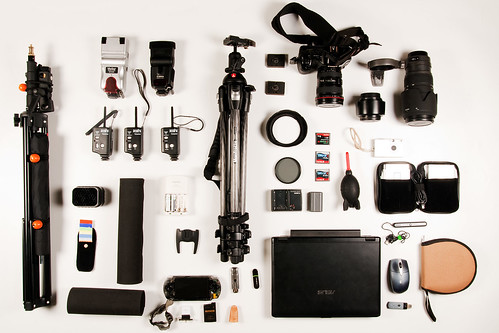
Photo Credit: celtics baby clothes
How can you save money on photography for your wedding? Do it yourself! DIY wedding photos won't sacrifice your precious wedding memories. Just make sure you are doing the wedding justice by creating a shot list before the ceremony.
As a traditional couple, you will want "classic" wedding portraits. Make sure you get the following shots for your do it yourself wedding album.
DIY Wedding Photo Shot List - Pictures of the Bride and Groom
Have the bride and groom stand in front of the church. Stand back from the couple so you can get their entire bodies into frame. Make sure to get the entire wedding gown in the picture.
Take a few steps forward, use your zoom, and take a close-up portrait of the bride and groom facing forward.
Have the bride and groom turn their heads and look into one another's eyes. Take a close-up.
Snap a photo of the bride and groom standing in front of the church on their wedding day.
DIY Wedding Photo Shot List - Photos of the Wedding Party
Every wedding album needs a picture that includes the entire wedding party. Line up the bridesmaids and groomsmen with the bride and groom in the center. The flower girl and ring bearer can stand in front of the attendants, but do not place them directly in front of the bride and groom. Doing so would block the bride's wedding gown.
Take some wedding photos of the bride with her bridesmaids. Then take some pictures of the groom with his groomsmen.
Make sure you get a picture of just the flower girl and ring bearer. These cute wedding photos will turn out great!
DIY Wedding Photo Shot List - Pictures of Family Members
Family plays an important role in any wedding. Make sure to include them in the wedding photographs.
Shoot the bride with her family and the groom with his family. Marriage unites these two families, so get a shot of them all together as well.
Make sure to get a picture with the grandparents as well.
DIY Wedding Photo Shot List - Photographs of The Ceremony
The ceremony is the most sacred part of the wedding. Don't be too intrusive while getting your shots. Here are some wedding photos you must get:
Each bridesmaid and groomsmen as they walk toward the altar
The flower girl and ring bearer as they walk down the aisle
The bride walking down the aisle and being given away
Close-up of the groom when he sees his bride
The bride and groom standing at the altar (from behind and from in front if you can manage)
The entire wedding party during the ceremony
Bride and groom's first kiss as a married couple
The couple lighting the unity candle
Bride and groom exchanging rings
Bride, groom, and attendants as they walk back down the aisle
DIY Wedding Photo Shot List - Reception Photos
The reception offers many opportunities to capture the spirit of celebration. Take a lot of journalistic style photographs during the reception of guests dancing, eating, and laughing.
In addition to these spontaneous photos, remember to snap the following pictures:
The bride, groom, and attendants in the receiving line
Groom removing and tossing the bride's garter
Bride tossing her bouquet
The wedding cake being cut and fed to the bride and groom (protect your camera from flying cake!)
The couple's first dance and dancing with their parents
The Most Important Tip for DIY Wedding Photography - Be Creative
This wedding photography shot list will get you started. It is not intended to limit your creativity. These are only the basic poses and wedding pictures a traditional couple would like to have in their wedding photo album. Take these basics and add your own ideas to create a unique wedding gift -- the gift of memories.
Sources
DFM Photography, Wedding Shotlist Helper, http://www.dfmphotography.com/wedding_shotlist.shtml
Personal Experience
Photography Project #1: Recreate Family Photos
photo source
A fun photography project you can do with your family or friends is to recreate special photographs. Here's how to do it:
Gather old photographs. Take a look through your photo albums to gather the old photo(s) you'll use. Try to go back as far as you can. If you're a teen recreating a moment from your childhood just a few years before, you'll have a large enough contrast. If you're an adult you'll want to go back further to a time when you looked somewhat different than you do now. Pick out a photo that is really memorable to you and others. The photo could have been embarrassing when it was taken, but you laugh about it now. Narrow down your top choices and consider which ones you can realistically recreate.
Grab your family and friends in the original photograph. After you've selected a photograph make sure your photo subjects are on board with recreating the special moment. If someone didn't like their hair in a certain photo now is the time for them to change it a bit. If the photo is a goofy or silly moment you'll want to maintain that same humorous nature.
Dress the part. You don't have to try to recreate the hair and clothing styles of the 90's, 80's, 70's, 60's, but you can wear the same type of clothing. If you're wearing suit in the original photograph, put on another suit. You may also want to similar colors if possible. If a fashion has come back in style similar what you're wearing in the original photograph, that could make for a stylish comparison.
Find the location. Try to go to the same location as the original photograph so both background and setting will be consistent. In some cases there may be a location you can't access. You may not be able to get into your old high school cafeteria. Or maybe you've moved to a different house. Try to find a similar location. If the photo was taken in your old kitchen, take a similar one in your new kitchen.
Study the poses. If you and a couple of friends have distinct poses in the old photo do exactly the same thing. If the photo is more of a close up then focus more on having the same facial expressions.
Place the photos side-by-side. Now that you've taken your recreated photograph take a look at the old and new images. What similarities do you see? What differences? Enjoy your new photo as you've just created new memories.
Saturday, February 26, 2011
The Budget Bride's Guide to Saving Hundreds on Photography
credit,source
If you are planning a wedding, you already know how much things can add up. From invitations, venues, catering, decorations, and so on, you can quickly spend thousands of dollars on your wedding day, without even realizing where all of it went. In fact, according to theknot.com, the average wedding cost is $27,800 per couple! Think of how that money could have come in handy in case of an emergency, in putting down a down payment on a new home, or in financing a fantastic honeymoon! However, if you take control of your budget now, you can have a memorable, elegant wedding while saving thousands for your happily ever after years.
The first thing you need to do when you are planning a wedding is to decide on how much you can reasonably afford and then discuss which items are the most important to you. Many couples decide that photography is at the top of their list. Follow the tips below to have memorable pictures, while staying on budget:
Shop around for photographers
The first step in saving money in general is to find out who offers the service and how much they charge. Never accept the first offer that you receive. Call various photographers and ask them what they charge and what their service includes. Be sure to consider how much the entire cost of photography will be. For example, a photographer who charges less per hour who charges more per each picture may not be a good deal. Search through your phone book and go online to see photographer's blogs and samples of their pictures.
Think outside the (office)box
Although there are plenty of photographers who specialize in photography and have a career in photography, there are also many skilled photographers who have different day jobs, pursue photographer as an interest, or specialize in other forms of photography. Check around for people such as these who have experience in photographing weddings, but who do not depend on it for their bread and butter. Think about anyone you know who fits this criterion: someone who takes pictures for the local newspaper, a sports photographer, a friend who has taken a few photography courses, etc. They will often charge much less than photographers who make their living from inflated wedding packages. Typically anything associated with weddings is more expensive than something without the wedding association. So try to find a photographer that has similar experience with a much smaller price tag.
Get digital prints
Ask your photographer if he can photograph you with a digital camera. Any type of special effect like using sepia pictures, black and white pictures, red eye removal, coloring in certain elements like the flowers while leaving the rest of the picture muted, and so on can be completed by just a few buttons. So you won't have an effects expense passed on to you. Also, ask your photographer if he can give you the digital prints on a cd or memory card. If he does this, you will need to be sure that he has signed over the rights of ownership to you so that you can develop the pictures yourself. This step could save you hundreds, maybe even thousands, and you will only be paying for his hourly rate and the ownership rights, rather than a certain dollar amount * the amount of each picture.
Consider limiting the photographer's time
Consider the actual amount of time that you want to have the photographer around. Keep in mind that many photographers will also charge you for the time it takes to travel and set up for the pictures. Some brides want the photographer to take pictures while they are preparing for the wedding, but if you are not interested in these types of pictures, don't ask the photographer to be around during that hour. Consider having your photographer take your pictures during the important parts of the ceremony and formal posed pictures after the wedding. Then just have him stay for the first hour of the ceremony, rather than the entire event. You can still get in many of the important photos during this time, such as the first dance, the receiving line, and the cake tasting. But you can save hundreds of dollars if you do not keep the photographer around for the next 1-3 hours of the reception. And with many photographers charging hundreds of dollars an hour, this is easy money that you can pocket for your future.
Opt out of the reception
Consider not having your photographer take reception pictures at all. This will save time on moving between venues, set up, and hours off of his rate. Many brides today are opting for more photojournalistic pictures, rather than posed pics. Place a couple of disposable cameras on each guest table and ask for their help in taking pics at the reception. Be sure to leave a convenient basket for them to drop the cameras off at before they leave. For the cost of a few $5 cameras, you will wind up with hundreds of pictures to choose from without the hefty photographer's fee.
Compare packages
When deciding on a package, be sure that you are comparing what each photographer is offering you. Sometimes you will save money by going for a package deal, sometimes you may be better off deciding on a certain number of pictures, rather than a package. So carefully scrutinize the charges for each package. Also be leery of unnecessary charges: a $100 wedding photo album is not worth it when you can go to your local supermarket and buy one for $10. According to Elizabeth and Alex Lluch in Planning the Most Memorable Wedding On Any Budget, you can also save big if you place the pictures in the wedding album yourself. It might take a little time, but make a day of it with your new spouse to look back at your happy memories.
Skip the engagement photos
Although it might be nice to have pretty picture to send with your invitations or to the local newspaper for your engagement announcement, you can use alternative methods, rather than pay the hefty studio and professional photography fee. For example, if you already have existing formal photos of you and your fiancé, use those instead of opting for a multiple hundred dollar studio session. Alternatively, ask a friend with photography experience to set up a muted background or go to a natural setting and have her photograph you and your fiancé for your engagement photos. Finally, check a local family photography studio, such as Wal-mart, Sears, or JC Penny. They will have appropriate backgrounds, but charge much less than a wedding photographer.
Barter, barter, barter
If you have met with several photographers and you liked one more than the others, but he was a little too expensive, let him know that you received a better offer and see if he comes down on the price. Also, before you commit, be sure that you ask "Is this the best deal you can give me?" for even more wiggle room. In this economic time, more and more people are learning powerful negotiating skills and businesses are suffering from unprecedented losses. See how flexible your photographer will be with the price. If you can't quite get the deal you want, go with another photographer or see if your first choice can throw in a freebie, such as a free parent's album, rather than a reduction in price.
Barter some more
If you have any type of service that you complete, see if you can exchange your service for the photography or a portion of his fees. Also, if you blog or you are involved in advertising or website development, see if you can get a discount if you provide free advertising for the photographer after your event. This type of service exchange can be posted in a local newspaper ad or on craigslist.com. Alternatively, if you have a friend or relative getting married, see if your photographer will give you a discount for a positive recommendation and referral.
Consider a student photographer
Yes, it might be scary to put the future of your only wedding pictures in a non-expert's hands, but you can save big by asking a student photographer to capture your wedding day. Additionally, students are more likely to give you digital prints (see above) in exchange for them gaining experience and increasing their portfolio contents. Be sure that they have some previous experience and make sure you look at their previous work. Also, be sure that your expectations are clearly stated and make sure that they can be depended on and that they are punctual.
Regardless of which photographer you go with, be sure that you get recommendations for him, check his portfolio, and make sure that you both know what you will be getting. Be certain that any adjustments are in writing, especially if the photographer has reduced the price. Then rest assured that you have done your best to get the pictures you want, and the peace of mind you need as you begin your new life with cash in your pockets.
Stephanie Harrison Photography - Where You'll Find the Best Photographer in Town

credit
Whether you're looking for that perfect photographer for senior pictures, wedding photos, new baby celebration or special family moments, Stephanie Harrison Photography is the place to go! You'll not only find a professional studio that is conveniently located in the heart of the Historic Depot District in Richmond, Indiana, but you'll meet one of the friendliest, easy going photographers around; not to mention at a great value!
The photographer at Stephanie Harrison Photographer, none other than Stephanie Harrison herself, offers an artistic style that can't be found elsewhere. The results of her work give an eclectic, non-staged, and real feeling. She captures expressions and movements perfectly in her photographs. She's got the perfect personality for children and adults alike. She can accommodate any situation from serious, quiet moments to doing whatever is needed to get an unsure baby to smile, make nervous folks feel comfortable or even catch that wondering gaze of a beloved pet.
Photos aren't always taken inside the studio at Stephanie Harrison Photography. The opportunity is also there to go outdoors and use the resources of the Historic Depot for a more urban look, combining the exposed brick of old buildings with the sweet, fresh face of a new baby, for example. Stephanie is also often available for on-site shoots for weddings, special celebrations and other purposes!
Stephanie Harrison has the experience to make your photo shoot the best it can be! She's been featured in a number of magazines across the world and has won various photography awards. With such skill and recognition one might think her prices would reflect it, but at Stephanie Harrison Photography, the value is unreal!
The session fee is a very reasonable $40.00 for up to four people. Prices for prints obviously vary by size but range anywhere from $8.00 for eight wallets up to $90.00 for a huge 20x30 print! She offers packages for senior pictures starting at a low $99.00 and Wedding Packages that can be had from $550.00. Also available are Gallery Canvas Wraps in various sizes which are, simply put, awesome!
Stephanie Harrison Photography can be found at 195 Fort Wayne Avenue in Richmond, Indiana and reached at (765)962-3133. The website, www.stephanieharrisonphotography.com offers numerous examples of Stephanie's work, a price sheet, bio, and contact information for setting up your first session.
Stephanie Harrison Photography; you simply won't find a better photographer around!